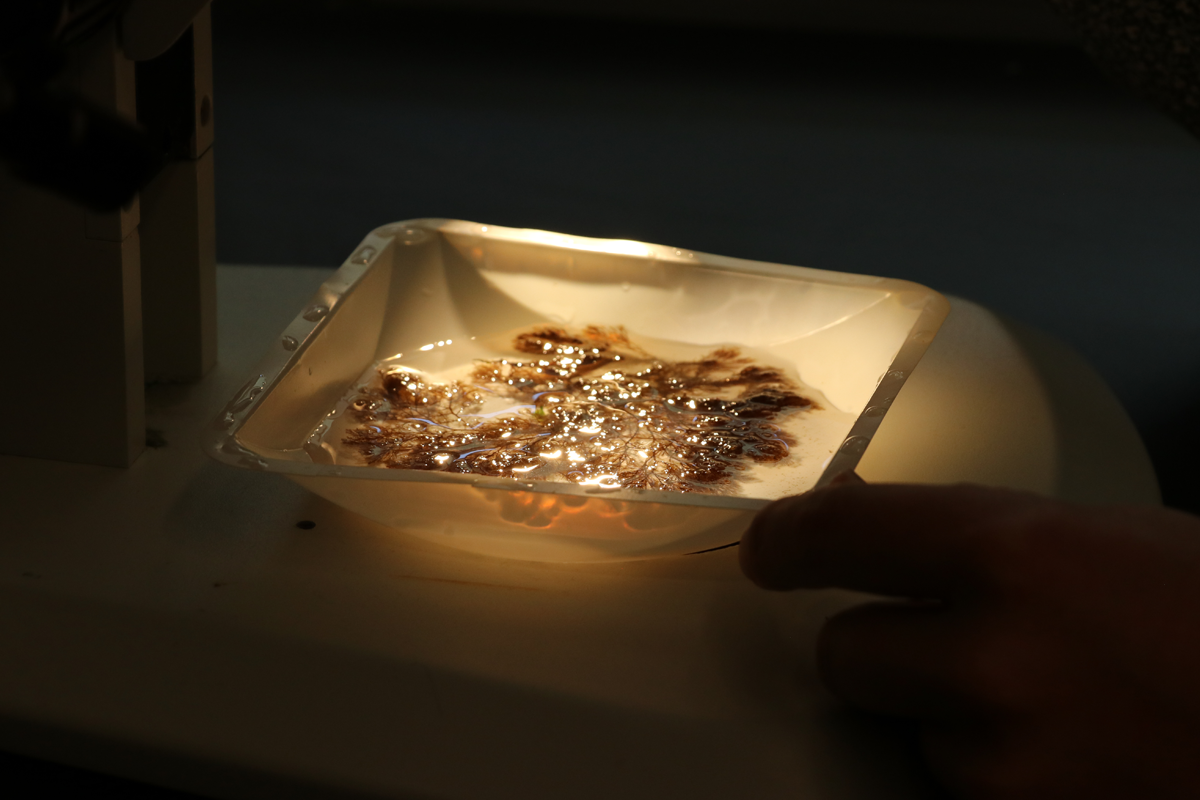


Anyone who has spent time on the beach knows that if you pile up sand, it’ll quickly fall apart. That’s why you add water to build a sand castle: the surface tension in the water helps bind the sand together like glue.
It turns out, though, if you add some bacteria and certain chemical compounds (including urea, one of the main waste products in human pee), you’ll get the strongest sand castle out there.
A team of researchers recently published a study that shows how this process of what’s called bio-cementation — using microorganisms, including bacteria, to bind granular material like sand — could provide a valuable nature-based solution to protect vulnerable shorelines (not just build better sand castles!).
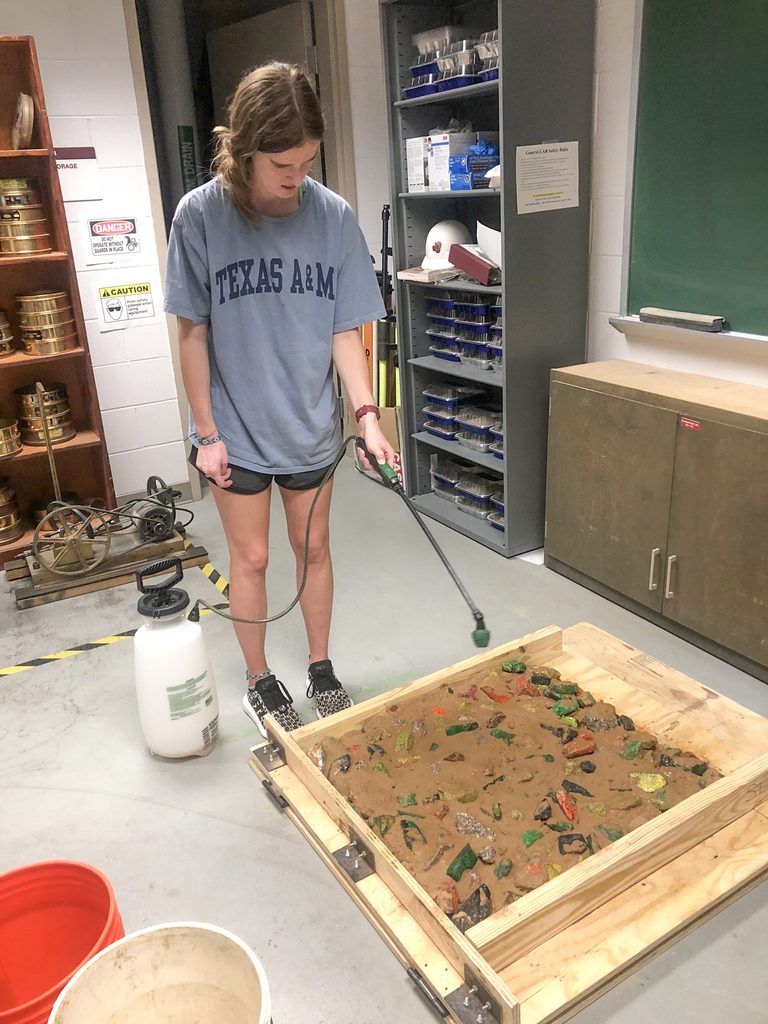
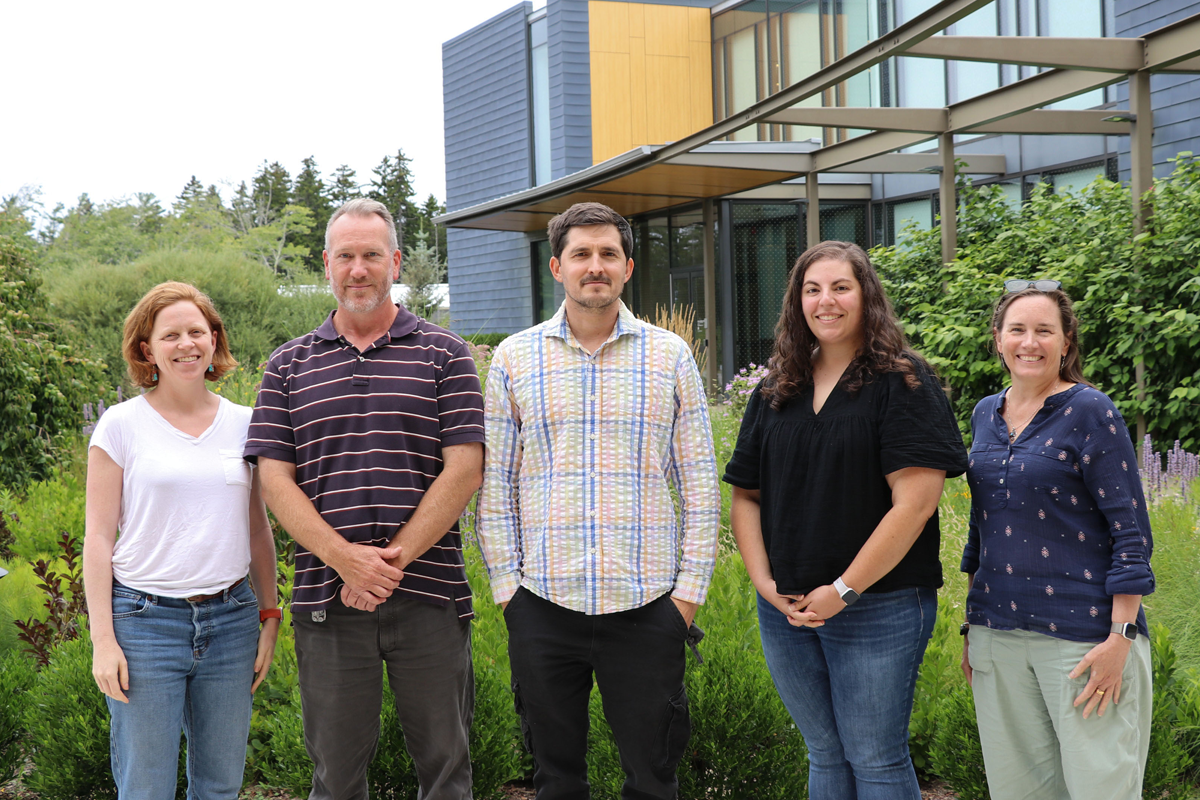
The study, led by a graduate student in ocean engineering at Texas A&M University, Galveston, features researchers from Delft University and Bigelow Laboratory’s own Senior Research Scientist Manoj Kamalanathan.
Seawalls and rock revetments distribute wave energy and minimize erosion to protect coastal communities from storm surge, waves, and currents. But these structures are prone to failure if they get too steep or lose any rocks.
Microbially Induced Calcium Carbonate Precipitation sounds complicated, but it’s actually pretty simple. The scientists added bacteria, urea, and calcium chloride to sand. The bacteria reacted with the chemicals to form carbonate, which is essentially limestone, the primary raw material in cement. Unlike actual cement, though, which is expensive and has a huge carbon footprint, this “living cement,” as Kamalanathan calls it, uses local sand and naturally-occurring microbes to minimize costs (financial and environmental).
The team was funded by the US Army Corps of Engineers to examine whether adding this material to the void space in a rock revetment would increase its stability and expand its design life.
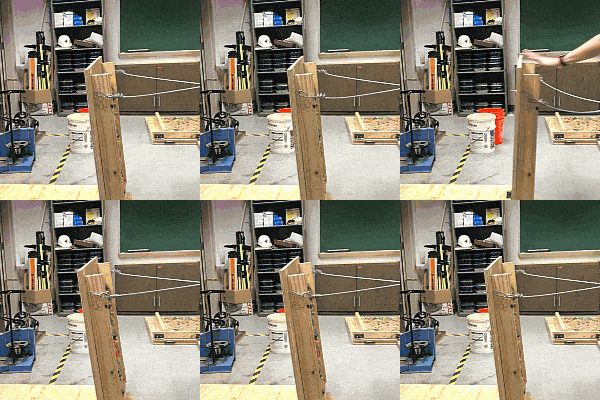
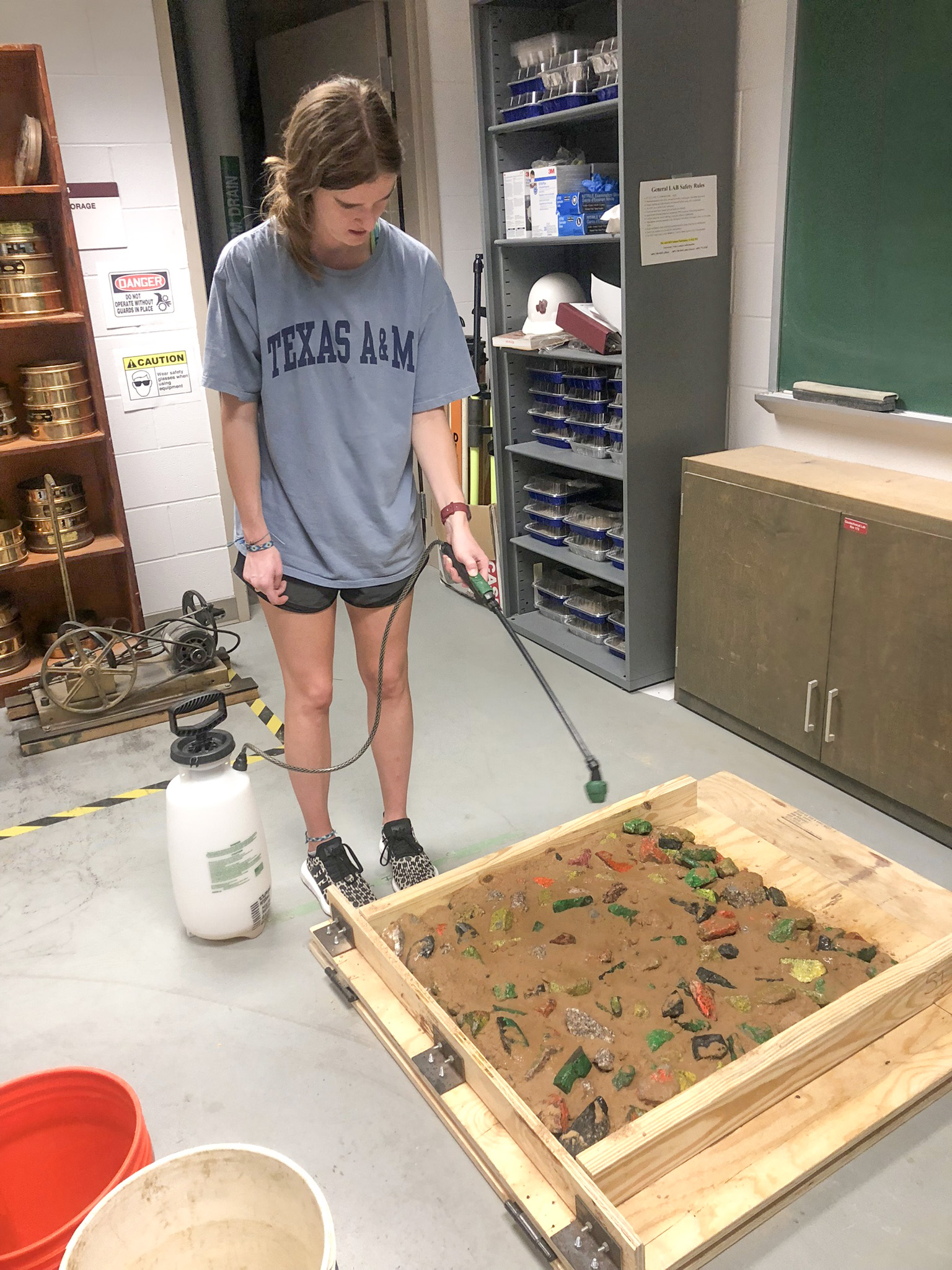
They experimented with how stable three different rock wall structures were as the slope angle increased. Just rocks got up to about 54 degrees from horizontal before the structure collapsed. Adding regular sand got the structure up to 59 degrees. By adding the bio-cemented sand, though, the team was able to raise the structure to fully vertical (as you can see in the video) before it collapsed.
This kind of biocement could be the future of building material, Kamalanathan suggests.
For the people of Galveston, Texas, where entire neighborhoods are routinely isolated because of flooding and where the city spends significant amounts of money every year to protect the shoreline from erosion, it could be a huge opportunity to protect lives and infrastructure and save money.
Check out the full study in the Journal of Coastal Research.
Photo/video credit: Jaclynn Turnbaugh.