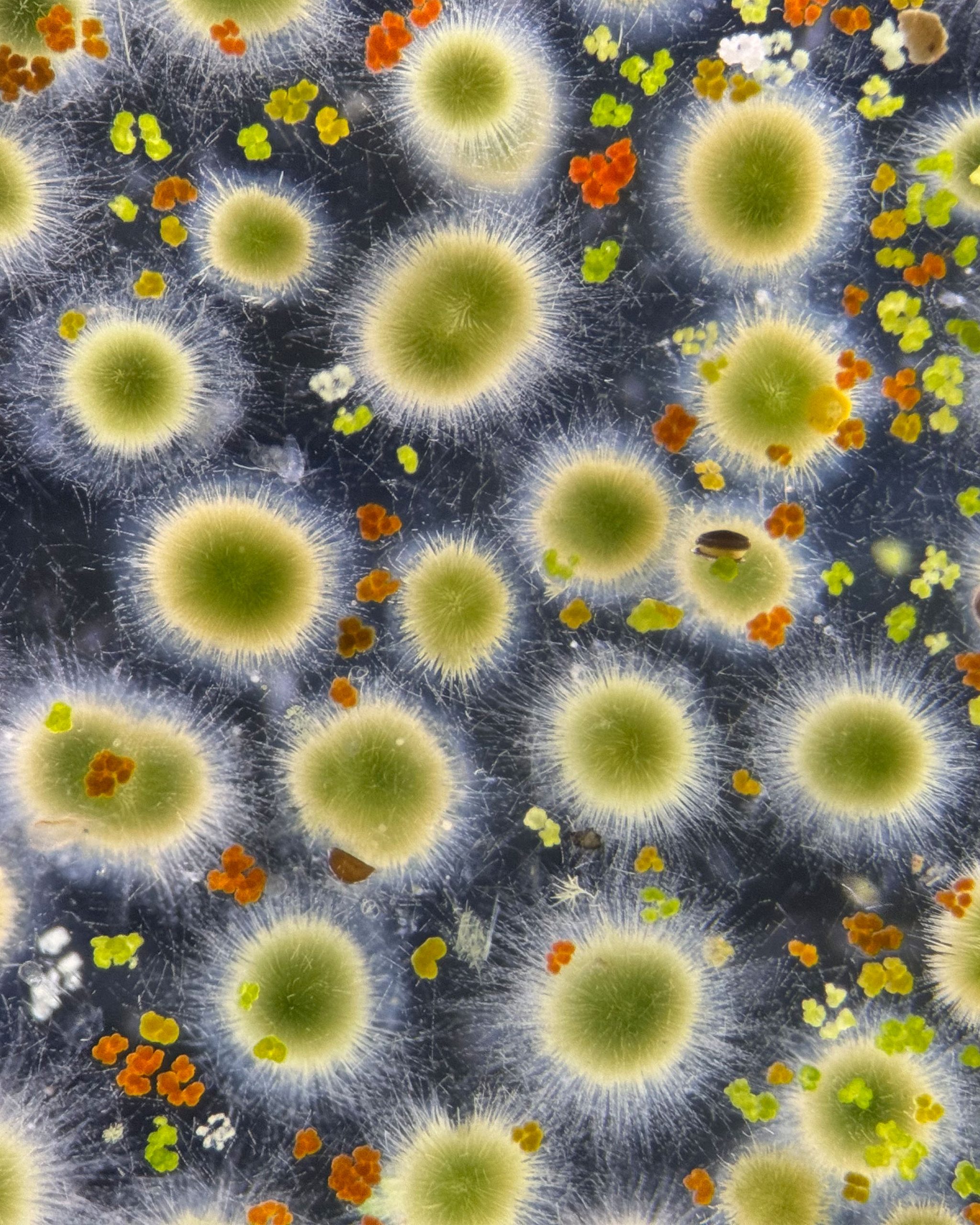


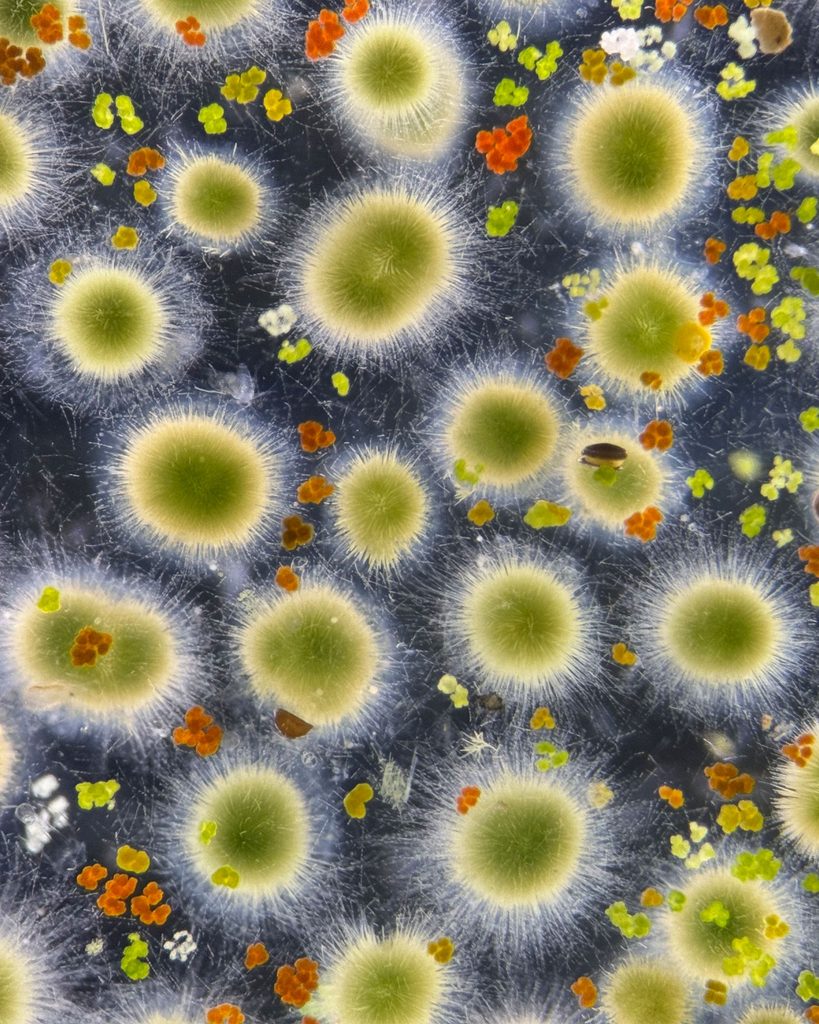
A new study by researchers at Bigelow Laboratory for Ocean Sciences and Oregon State University shows that a well-known cyanobacterium that looks like puffballs formed on recreational lakes shows little toxic potential.
The team assembled the first complete genomes of Gloeotrichia echinulata, comparing samples from West Coast and Northeast lakes. They found no evidence of the characteristics required to produce the toxins commonly associated with cyanobacteria.
However, Gloeotrichia can still be a nuisance, including affecting the taste of drinking water or blooming alongside toxigenic species, pointing to the need for further monitoring of recreational lakes.