

Eelgrass meadows may not always get the same attention as kelp forests and coral reefs, but, like those latter two, these ecosystems are incredibly rich and biologically diverse, underpinned by a foundational species that does everything from improve water quality to provide habitat for fish and shellfish.
But this critical ecosystem is also in decline along many coastlines. Seagrass wasting disease is partly to blame.
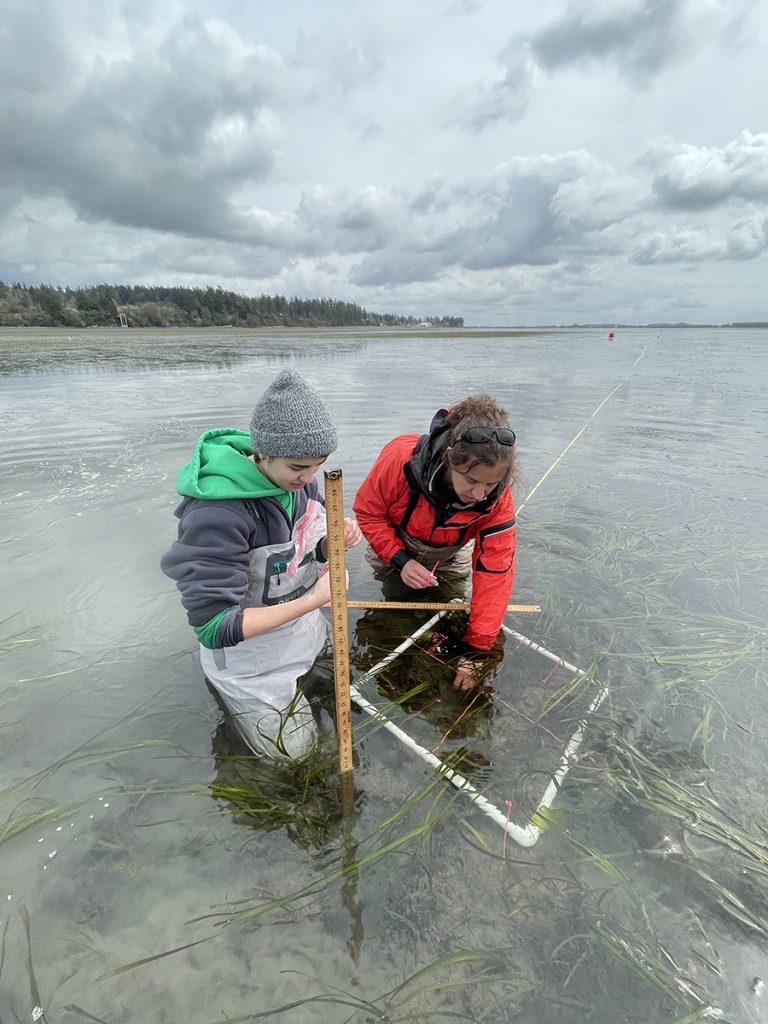
Bigelow Laboratory Senior Research Scientist Maya Groner is co-leading a multi-institutional, multidisciplinary project to understand the cause and consequences of wasting disease — and how a warming ocean might make these plants more vulnerable to pathogens. The project is showcasing the complexity of marine disease ecology and the importance of regular monitoring, while also training a new generation of ecologists to help understand the growing threat of infectious diseases in a changing ocean.
In a new paper, the team highlights how interactions between the whole biological community, from bacteria to shellfish, is influencing the spread of this infectious disease.
Video: Chloroplasts in eelgrass die as a wasting disease infection spreads (Credit: Lindsay Alma and John Burns).