
Over the last several years, scientists and resource managers have observed a decline in the number of young lobsters surviving into adulthood in the Gulf of Maine, despite an increasing number of lobsters being born.
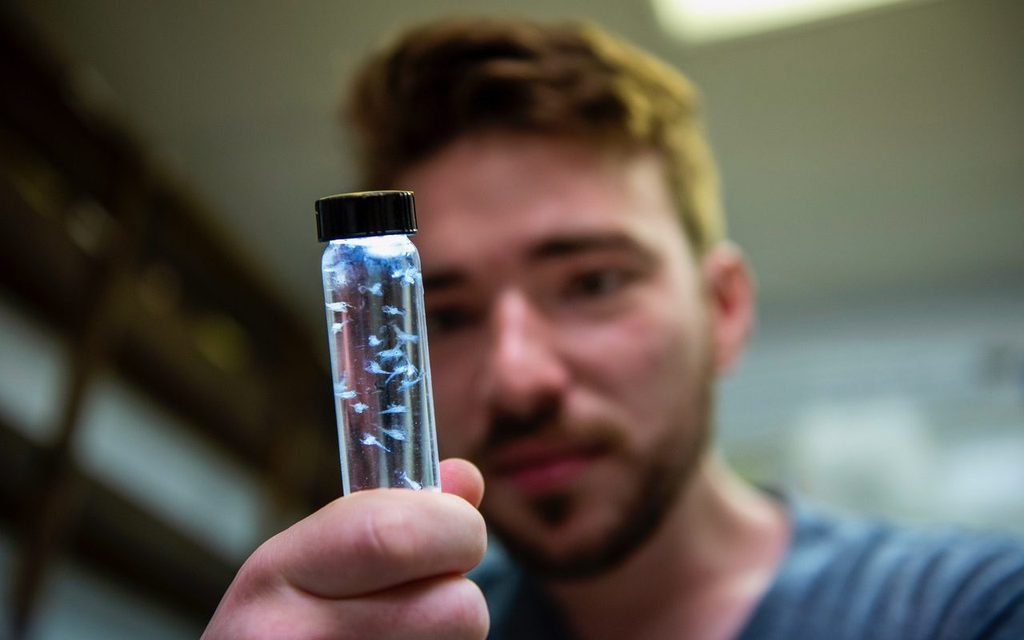
A team of researchers from Bigelow Laboratory for Ocean Sciences and the University of Maine have been tackling this lobster mystery. They’ve discovered that larval lobsters preferentially feed on the tiny but mighty copepod Calanus finmarchicus — the availability of which also appears to be declining.
In a new study, a team from UMaine, Bigelow Laboratory, and University of Southern Maine, combine traditional microscopy techniques and new environmental DNA tools to illuminate how important Calanus are to the Gulf of Maine food web and how their decline could influence the future of the fishery.
Learn more about the discovery at UMaine News and read the full paper, led by former UMaine-Bigelow Laboratory PhD student Alex Ascher and featuring Bigelow Laboratory Bigelow Laboratory researchers Peter Countway, David Fields, Maura Niemisto, and Robin Sleith.
Related stories from Bigelow Laboratory:
Researchers Develop Tools for Unlocking Larval Lobster Diet (June 25, 2025)
Student Research Helps Shed Light on Lost Lobsters (March 30, 2022)