At Bigelow Laboratory, we know that the smallest things can have the biggest impact on the ocean ecosystem. A multi-institutional team, led by the University of Rhode Island and featuring our researchers, is helping show just how important some of these tiny animals called copepods are for shuttling energy and nutrients across the ocean food web.
The team has spent the last several years using advanced laboratory and field methods to understand how the biological communities of the surface and seafloor are connected in the Gulf of Maine and how that relationship — and the larger marine food web — adapts as environmental conditions change. The project has relied on some unique datasets, including coral skeletons that preserve a record of growth like tree rings, lots of tiny copepod poop pellets, and a biological archive that has preserved samples of common copepod species going back 50 years.
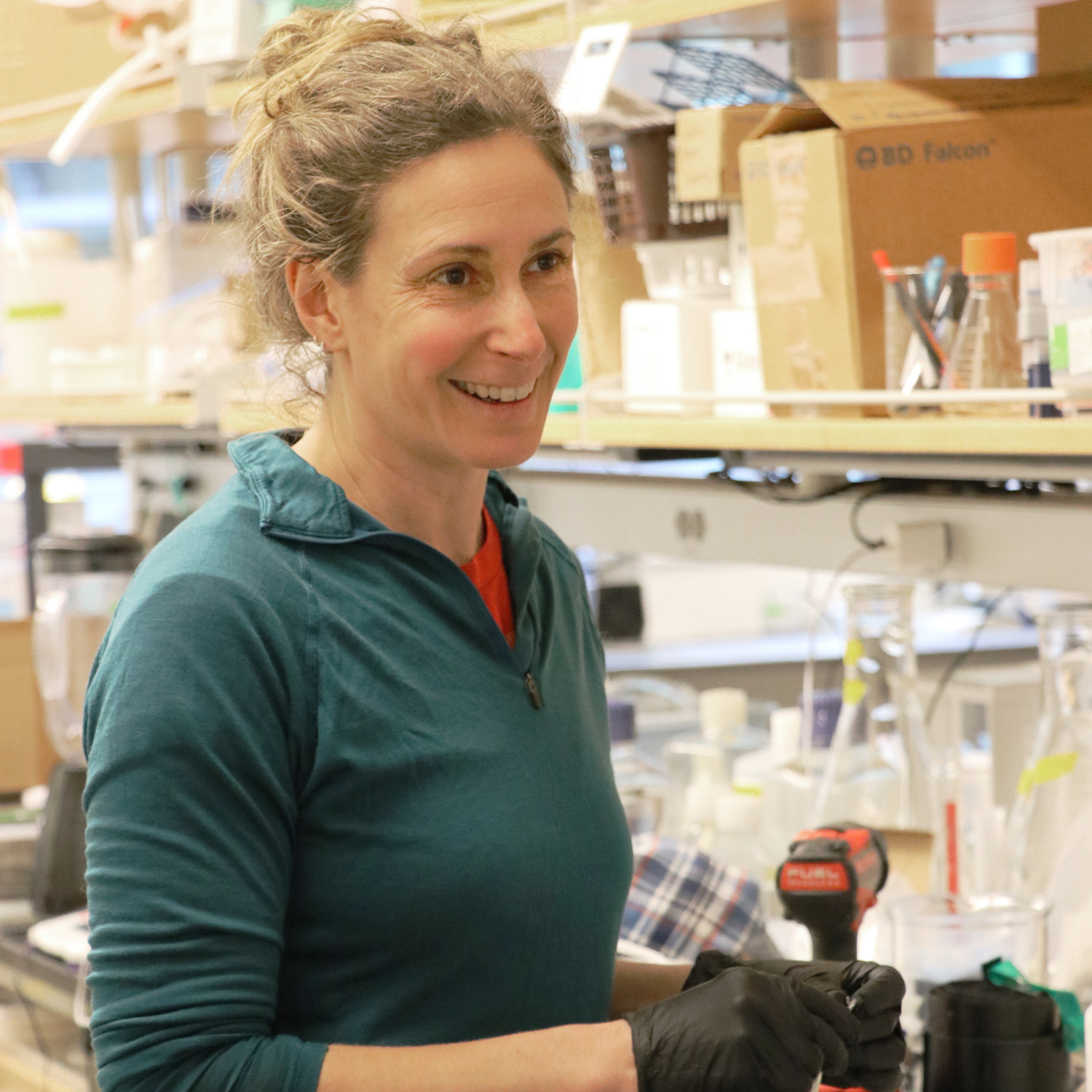
Senior Research Scientist Karen Stamieszkin prepares to examine some of the preserved copepod samples the research team collected back at Bigelow Laboratory (Credit: Bigelow Laboratory).
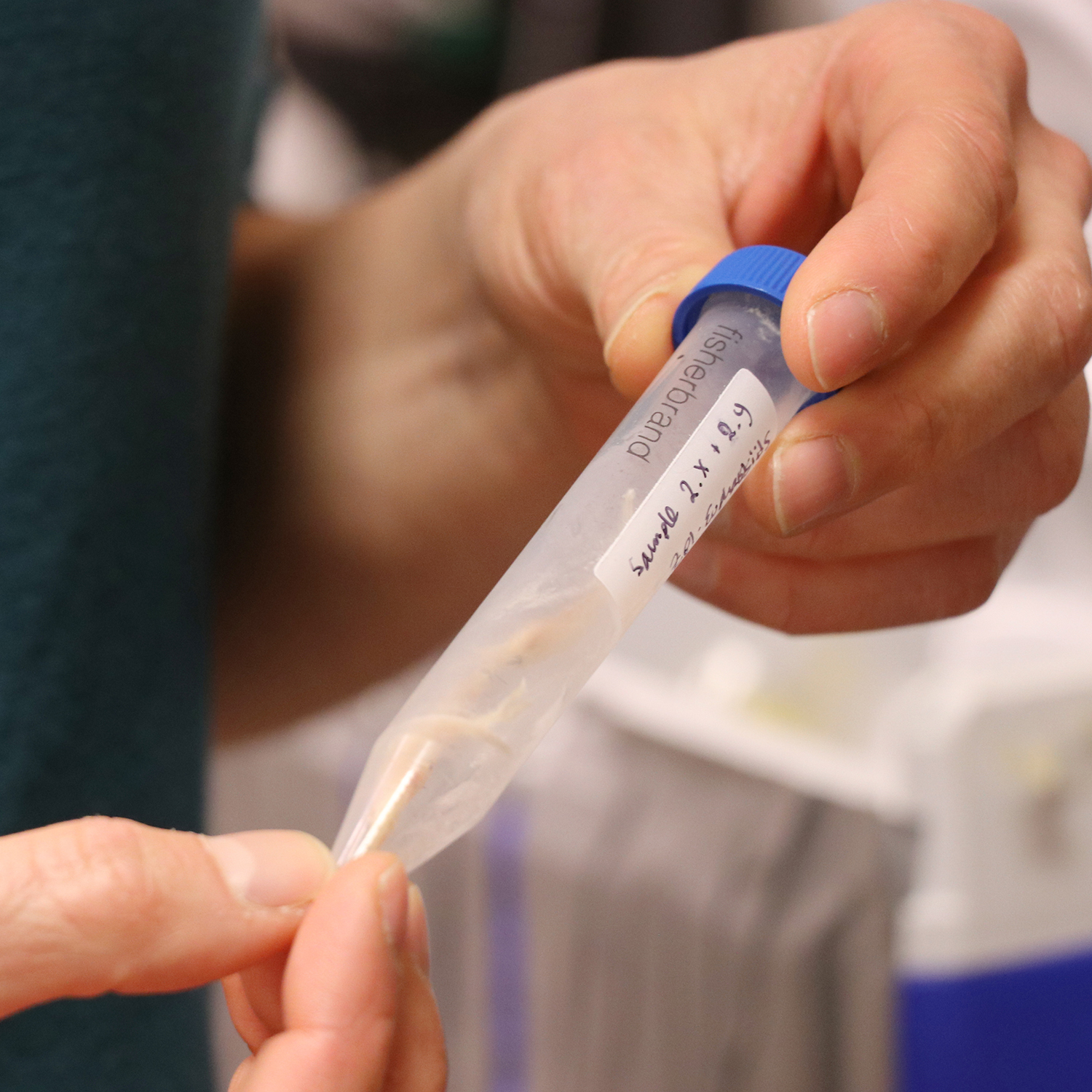
Small test tubes contain preserved samples of different copepods collected from the Gulf of Maine (Credit: Bigelow Laboratory).
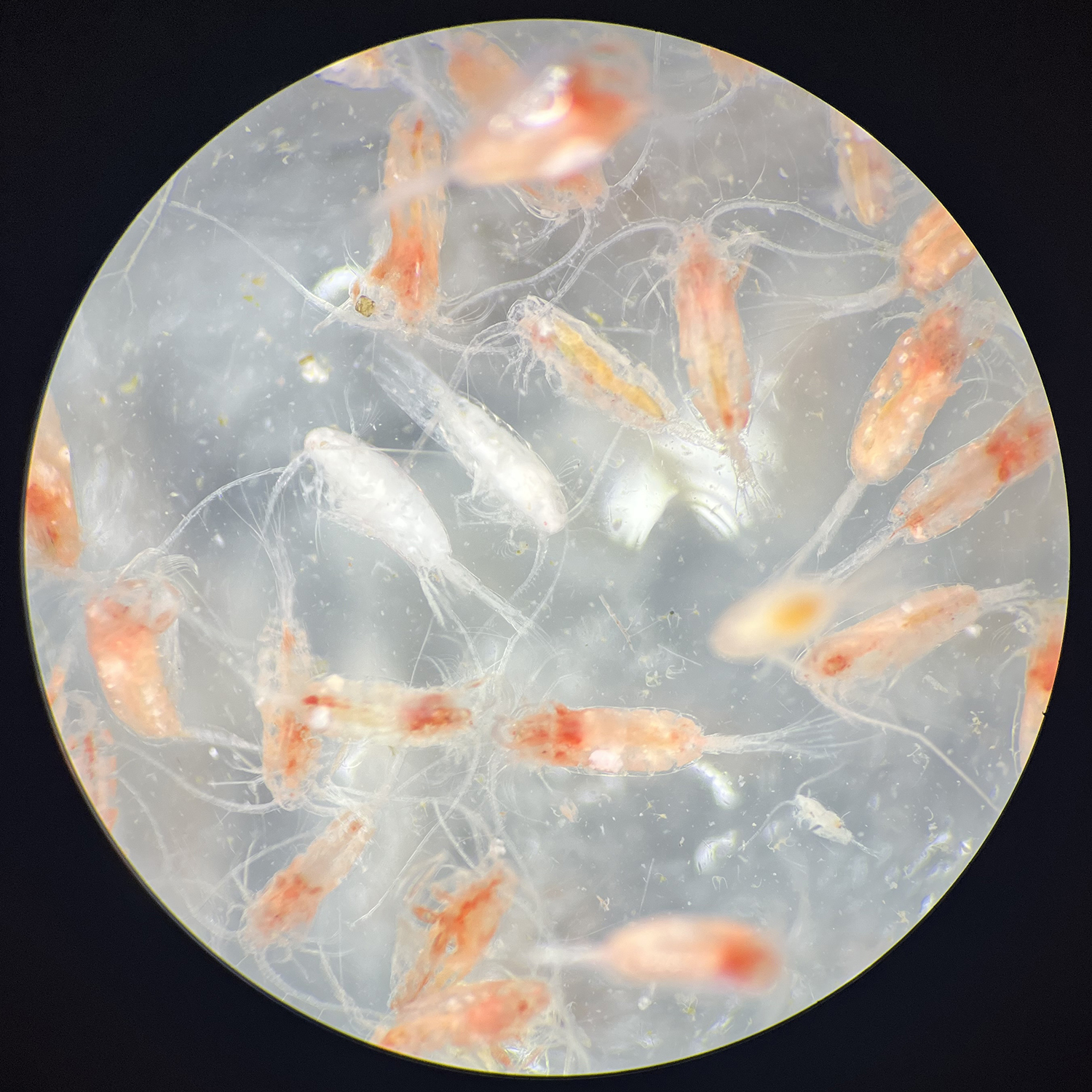
A micrograph of preserved copepods collected during the 2023 research cruise shows an abundant community of pink Calanus finmarchicus among a handful of white Metridia lucens (Credit: Karen Stamieszkin).
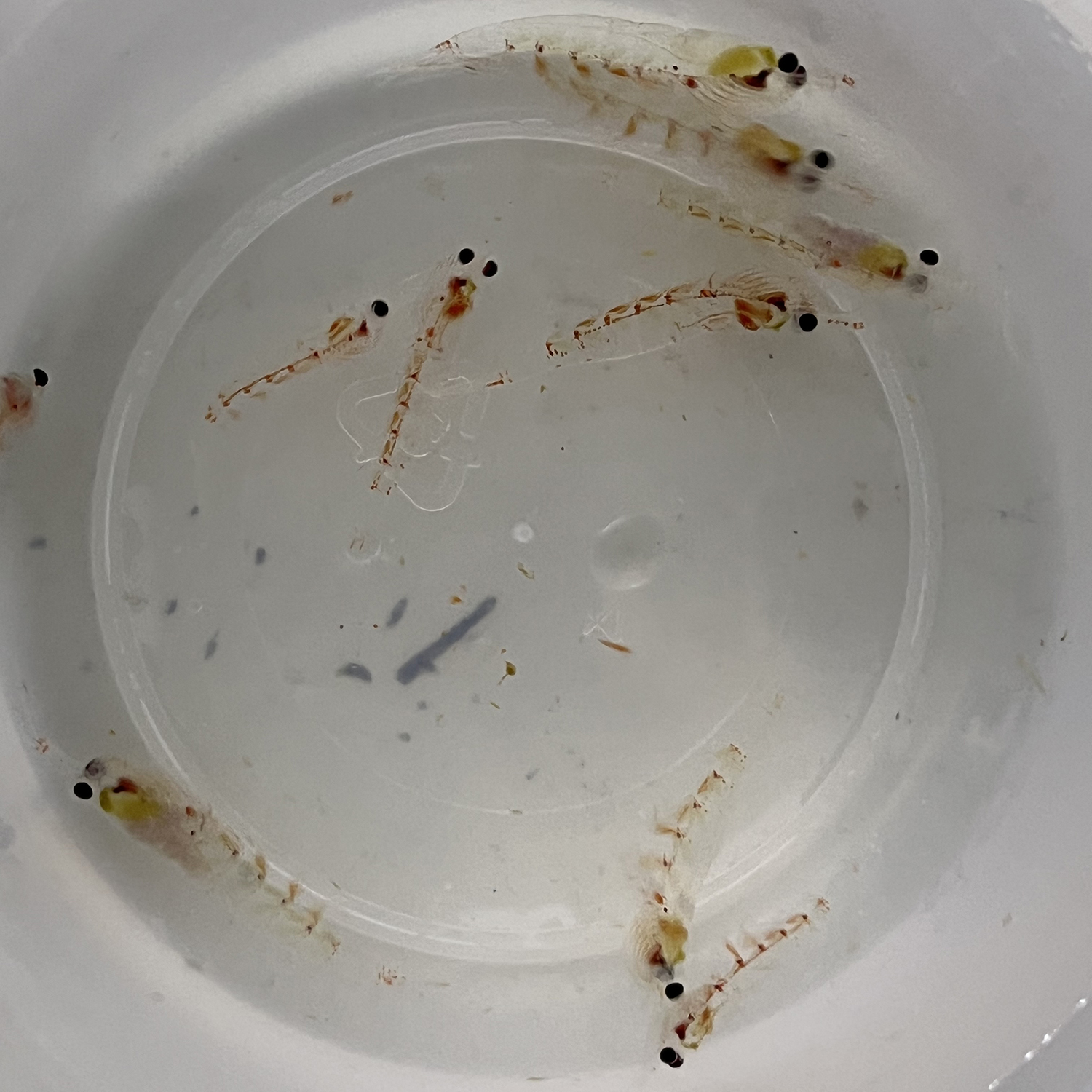
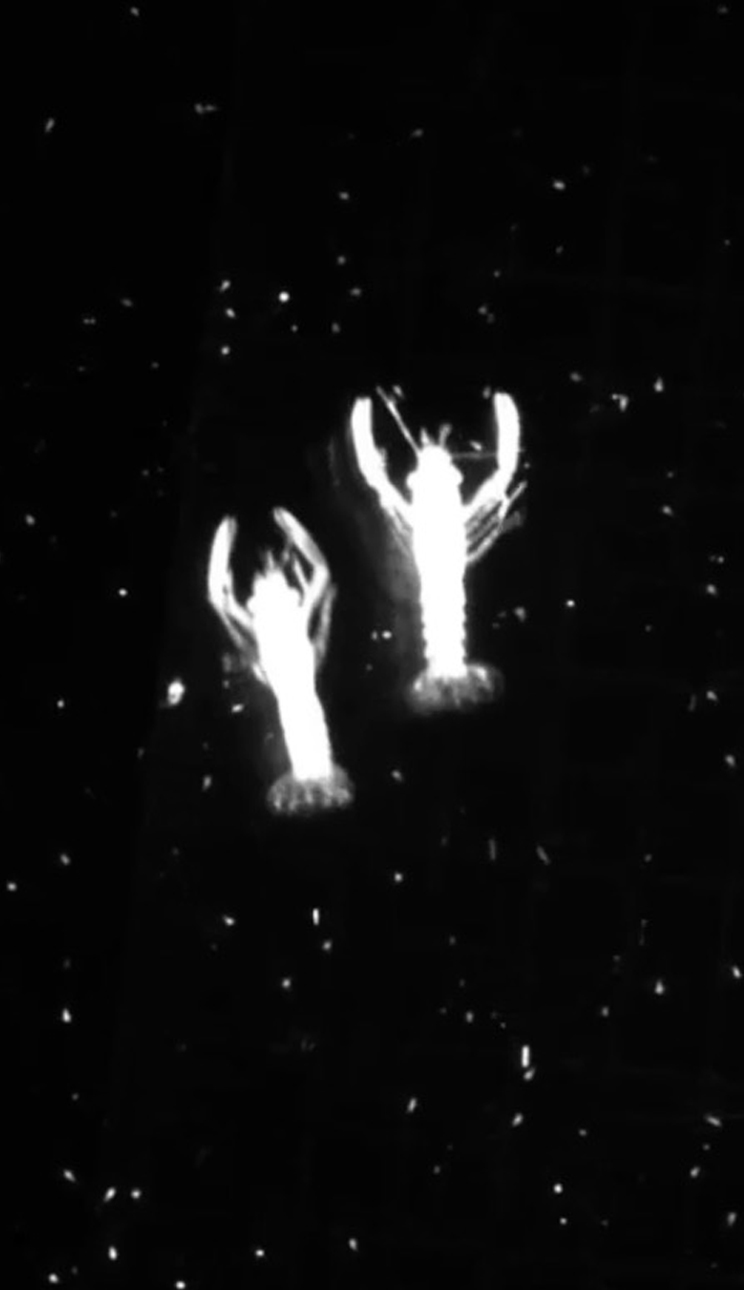
A sample of rapidly swimming zooplankton, the small animals that help drive the marine food web, collected from the Gulf of Maine (Credit: Karen Stamieszkin).
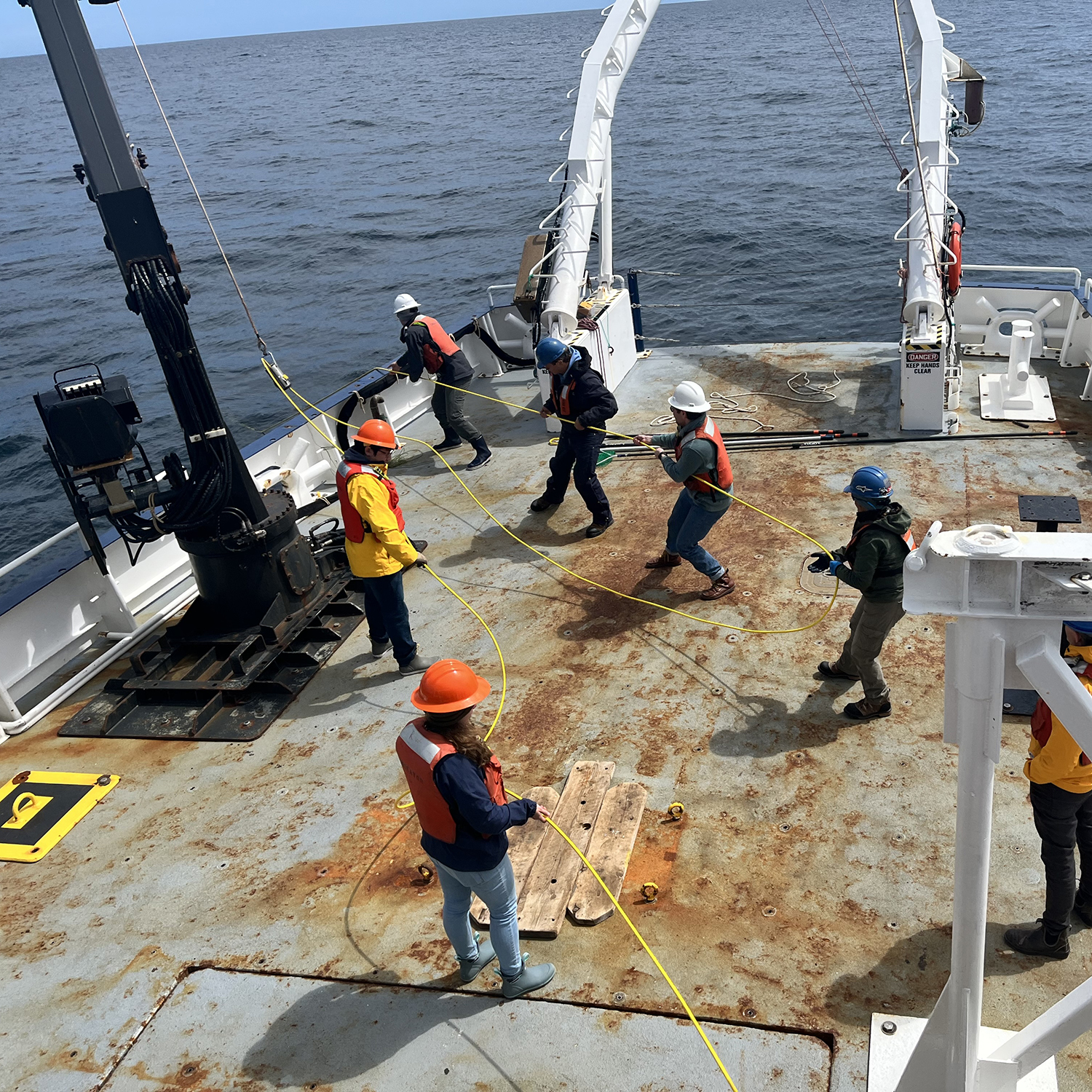
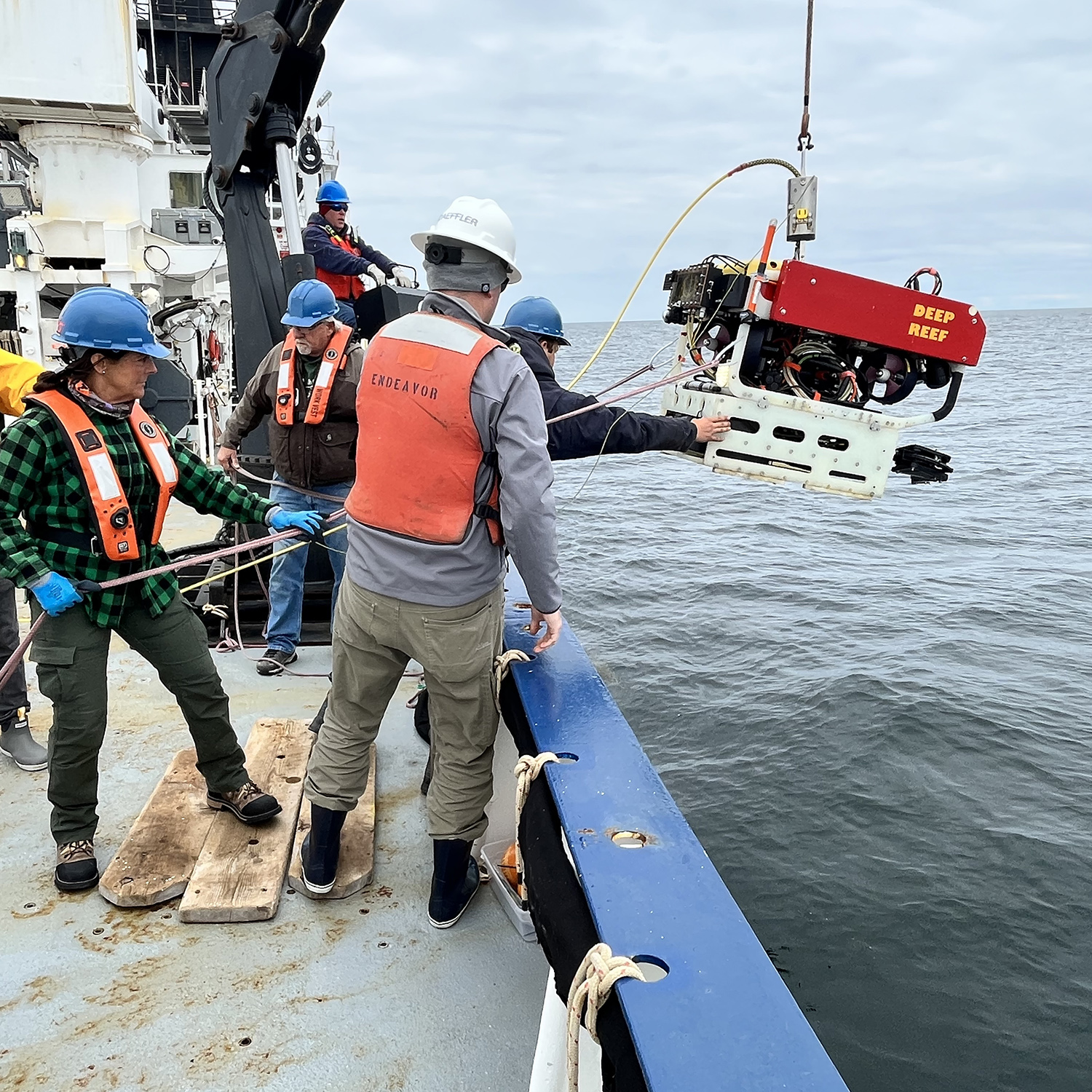
Researchers aboard the R/V Endeavor in 2023 deploy a remotely operated vehicle for collecting coral samples from the seafloor of Jordan Basin (Credit: Karen Stamieszkin).
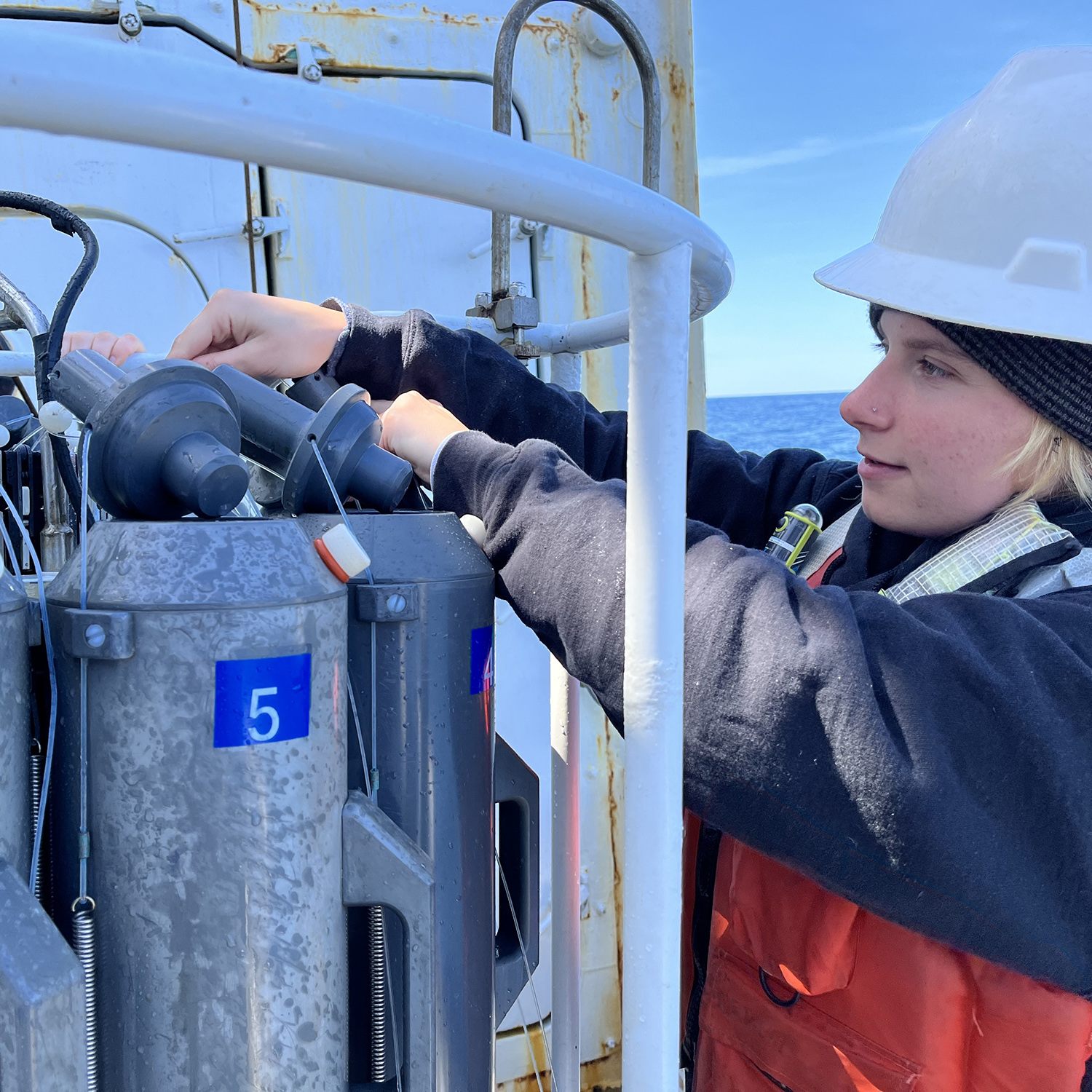
Lindsay Agvent, a former masters student with McMahon at URI, prepares a CTD sampling device on board the 2023 research cruise to Jordan Basin (Credit: Karen Stamieszkin).
Researchers aboard the R/V Endeavor in 2023 deploy a remotely operated vehicle for collecting coral samples from the seafloor of Jordan Basin (Credit: Karen Stamieszkin).
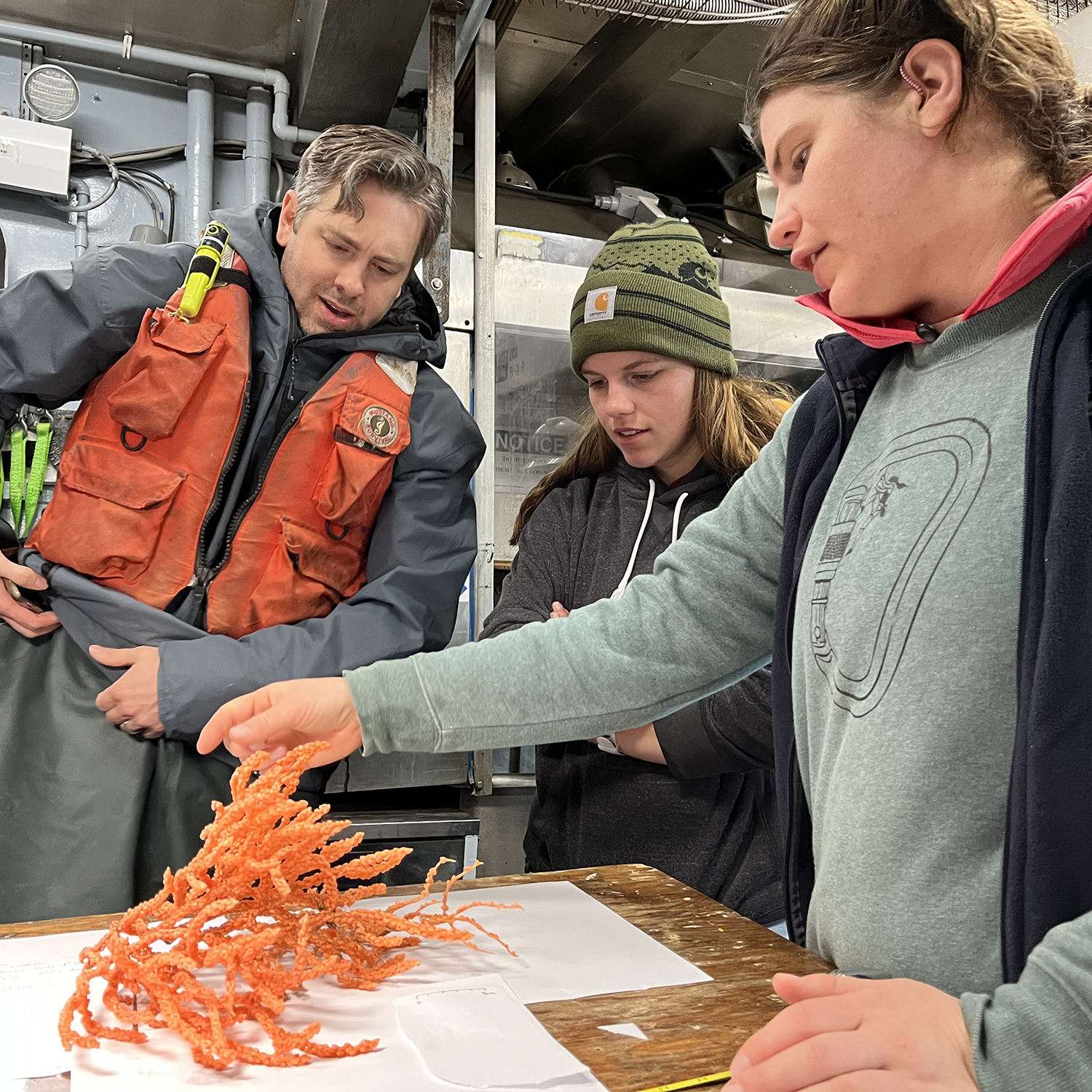
Nowakowski (right), McMahon (left), and Breanna Motsenbocker (center), a former PhD student at URI working with Brennan Phillips, one of the researchers on the project, examine a sample of coral recently brought up from the seafloor (Credit: Karen Stamieszkin).
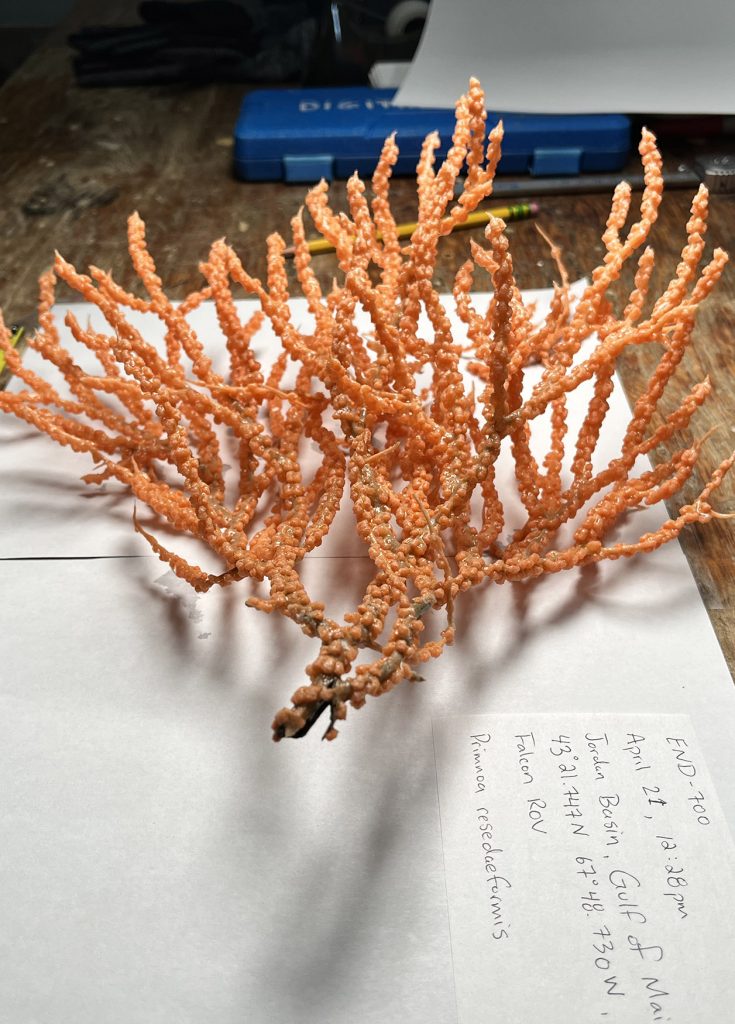
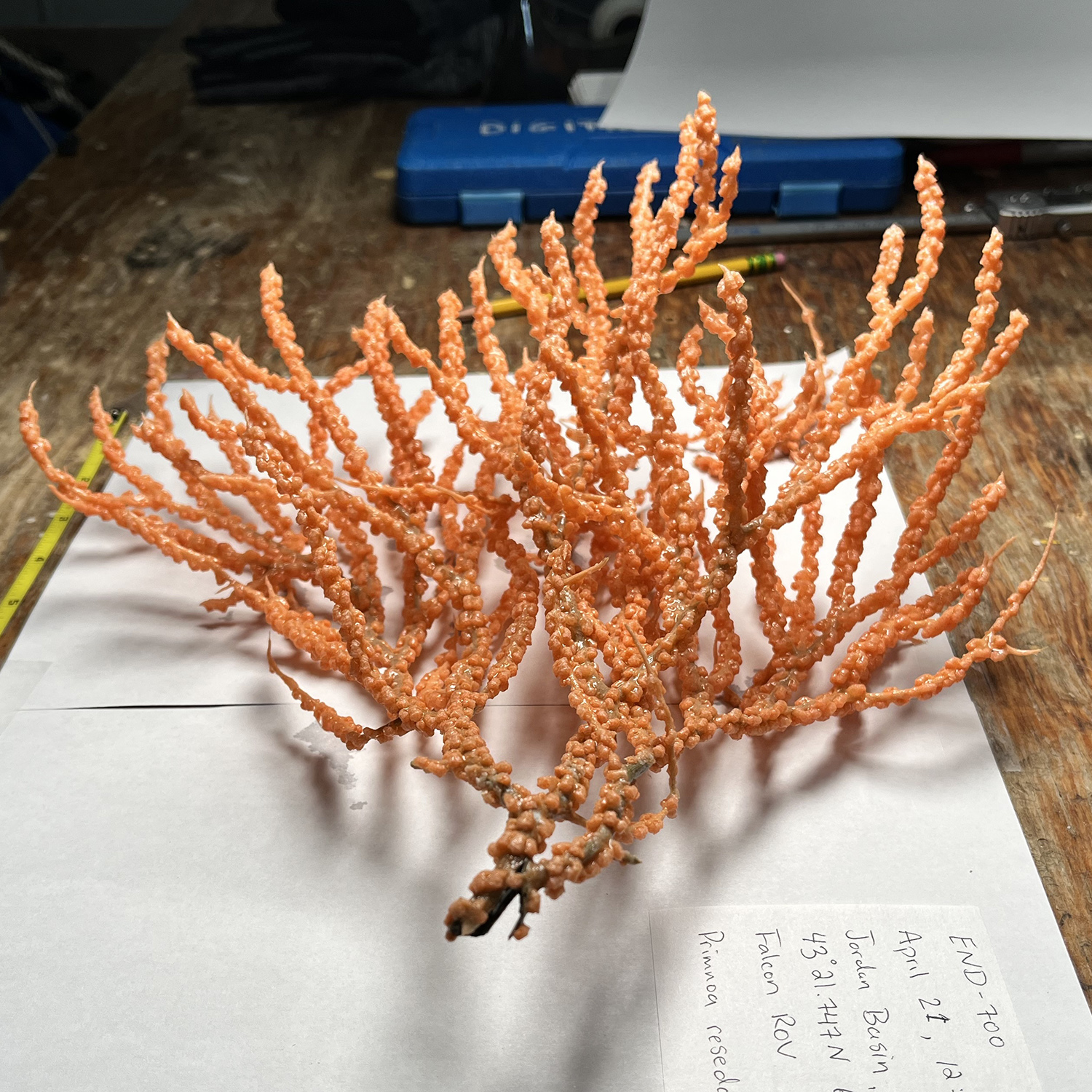
Using an remotely operated vehicle manned by Brennan Phillips, an associate professor at URI, and his students, the research team collected samples of Primnoa resedaeformis, a species of coral found on the seafloor in the Gulf of Maine (Credit: Karen Stamieszkin).
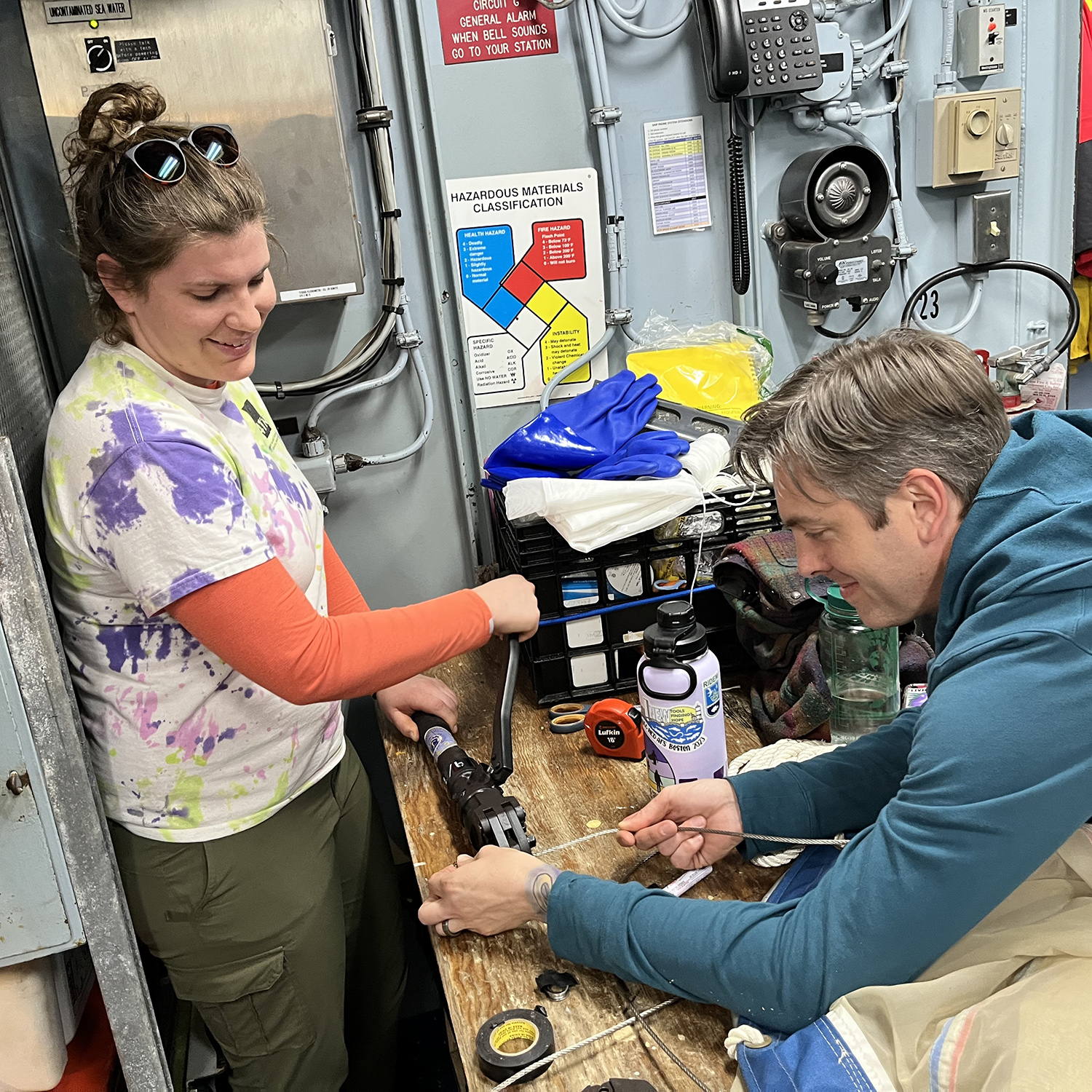
Nowakowski and McMahon calibrate equipment aboard the 2023 research cruise to Jordan Basin (Credit: Karen Stamieszkin).
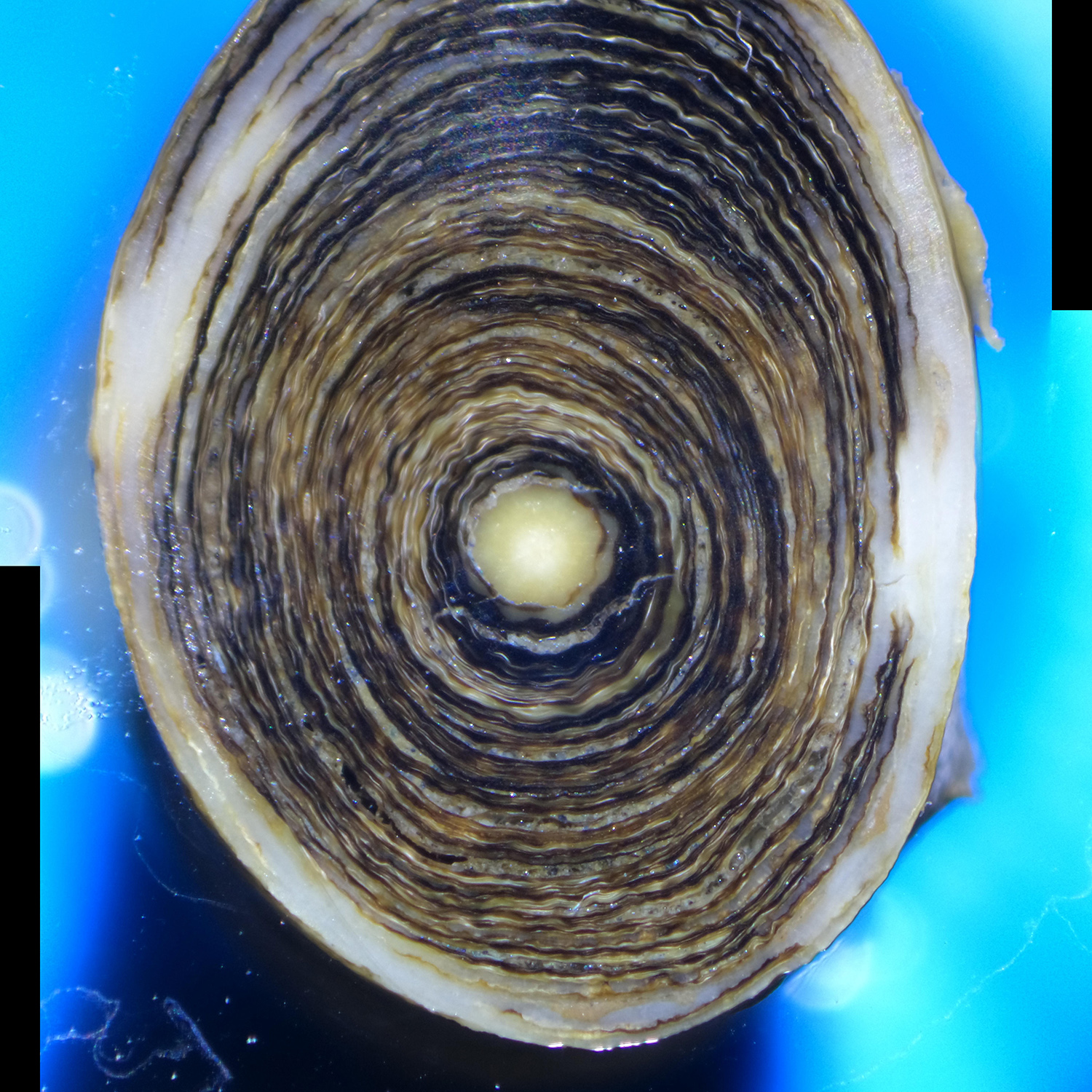
A cross section of a Primnoa resedaeformis shows how corals keep records of their growth in their skeletons similar to tree rings (Credit: Karen Stamieszkin).
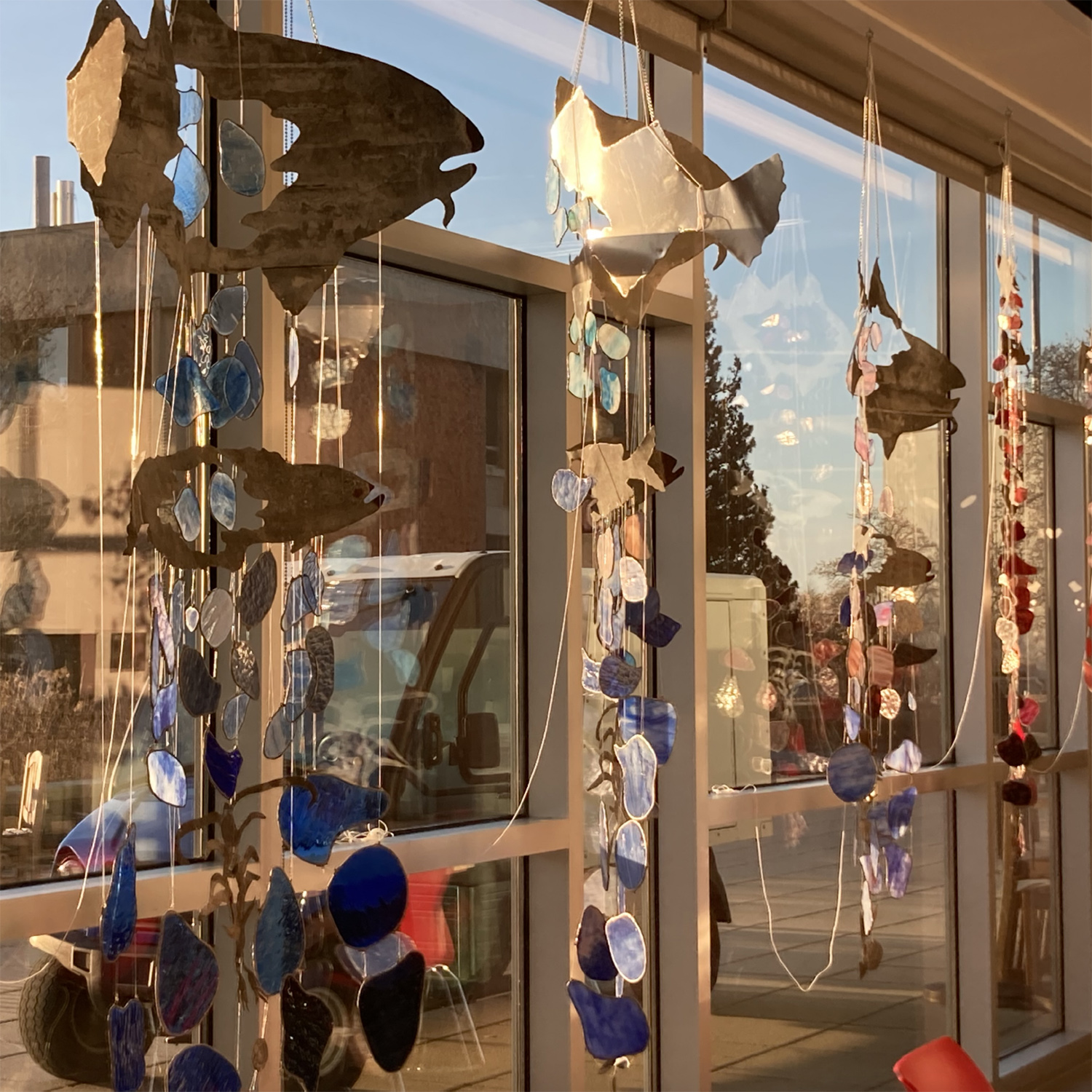
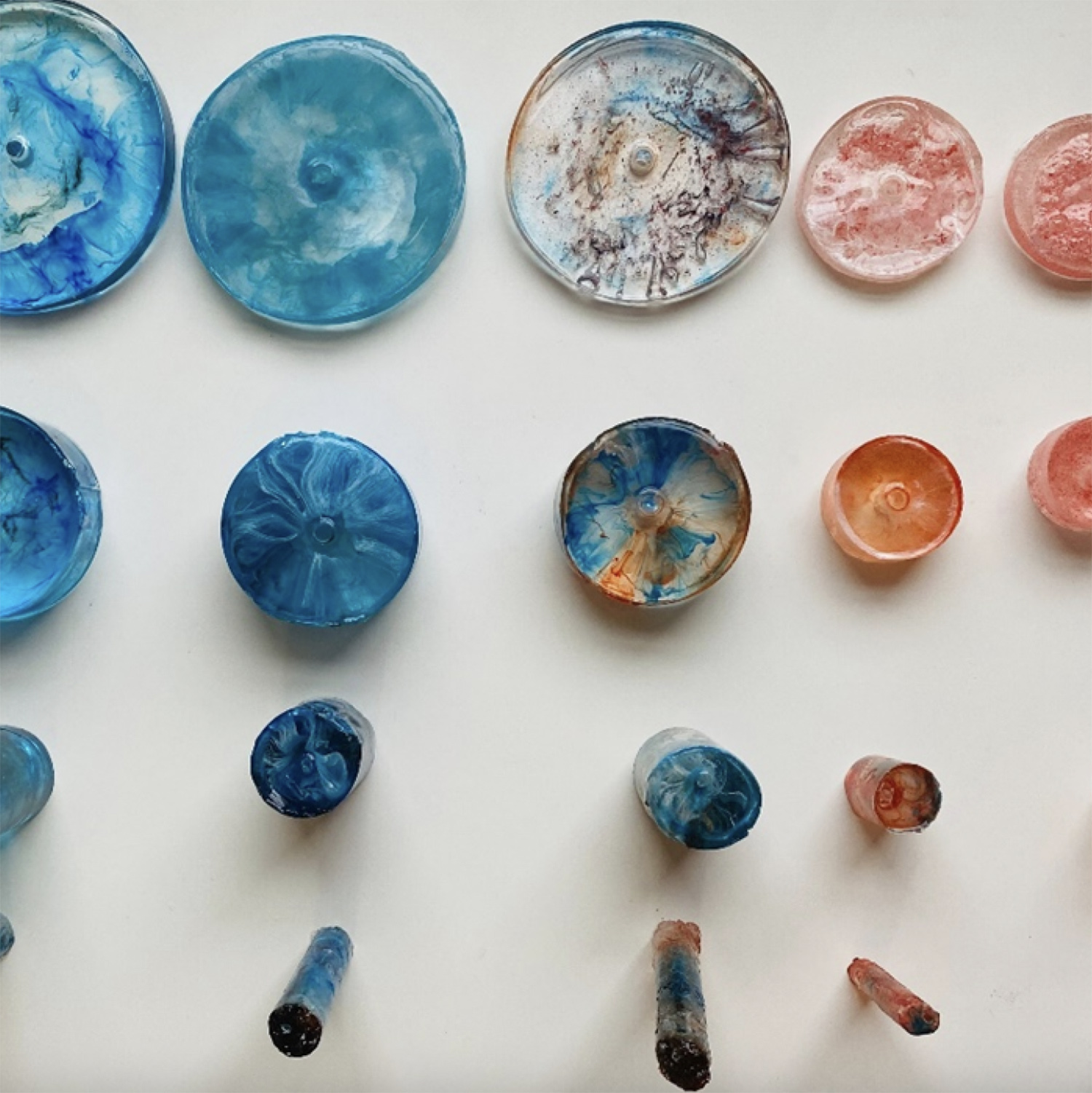
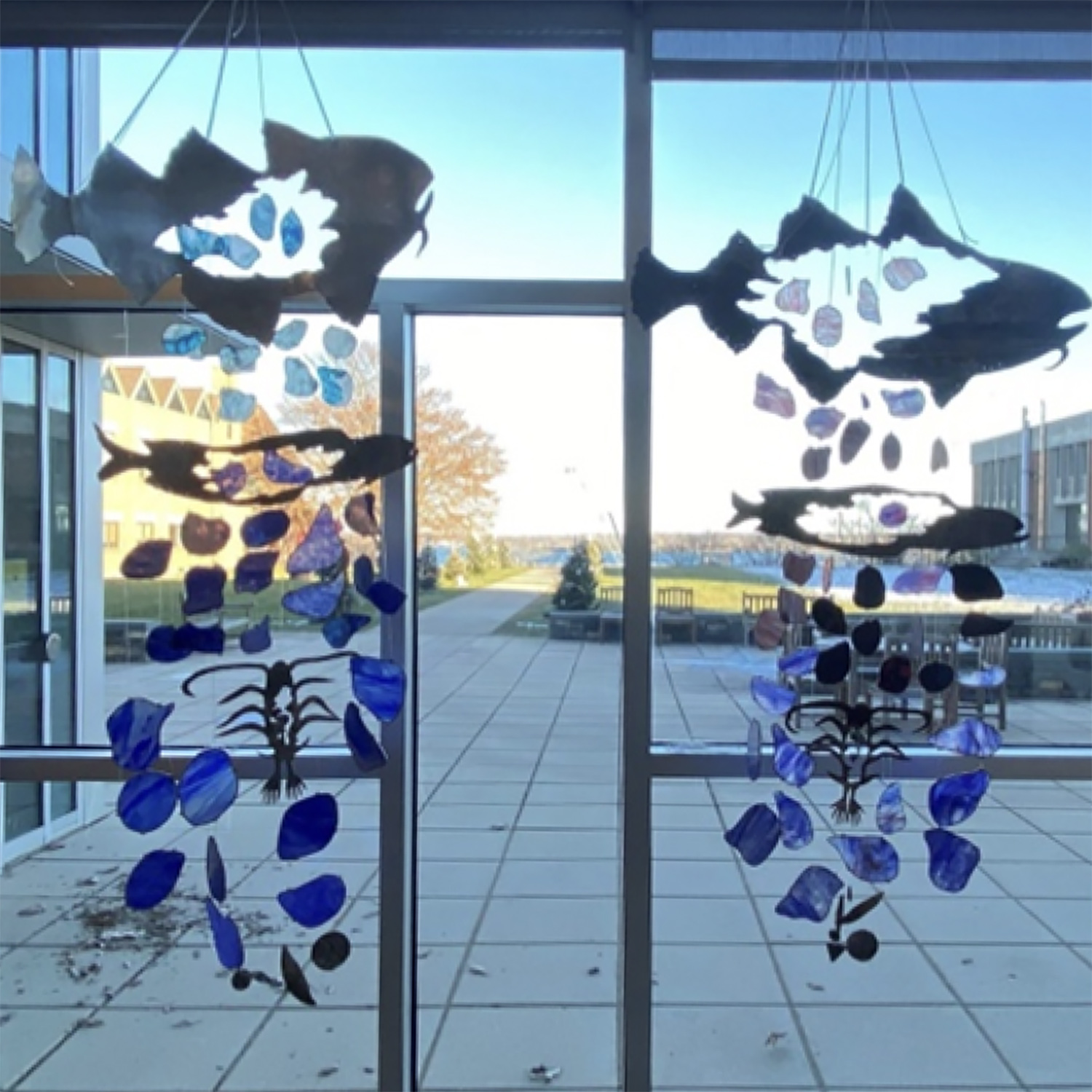
Sculptures created by Nowakowski and Eunhyung Chung, a former masters student at the Rhode Island School of Design, visually communicate how the Gulf of Maine food web has changed, with the glass color and length of the sculptures corresponding, respectively, to ocean temperatures and the number of steps in the food chain (Credit: Catrina Nowakowski).
Sculptures created by Nowakowski and Eunhyung Chung, a former masters student at the Rhode Island School of Design, visually communicate how the Gulf of Maine food web has changed, with the glass color and length of the sculptures corresponding, respectively, to ocean temperatures and the number of steps in the food chain (Credit: Catrina Nowakowski).
Sculptures created by Nowakowski and Eunhyung Chung, a former masters student at the Rhode Island School of Design, visually communicate how the Gulf of Maine food web has changed, with the glass color and length of the sculptures corresponding, respectively, to ocean temperatures and the number of steps in the food chain (Credit: Catrina Nowakowski).
This work is challenging oceanographers’ assumptions about how the Gulf of Maine ecosystem works and highlighting the challenges of using historical data to understand our rapidly changing future.