

This story originally appeared in the Summer 2026 edition of Transect.
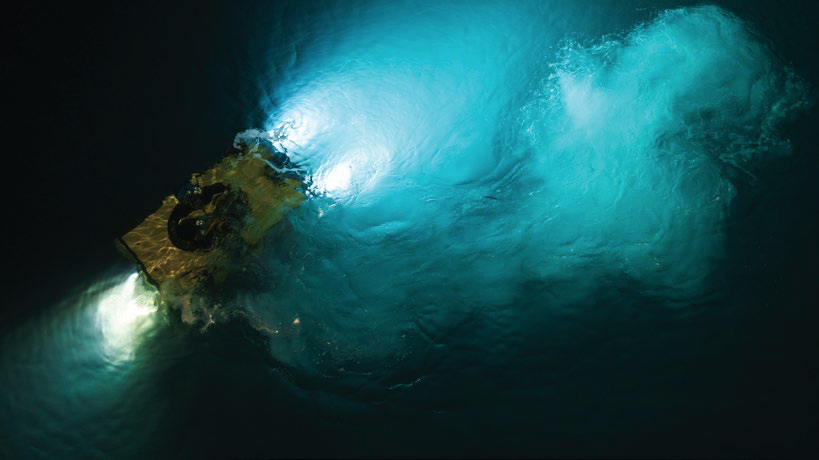
As the Artemis II crew celebrated a successful return from their groundbreaking mission to the moon, a team of scientists, engineers, and artists were preparing for a mission of their own to an environment only slightly less extreme — and certainly no less mysterious.
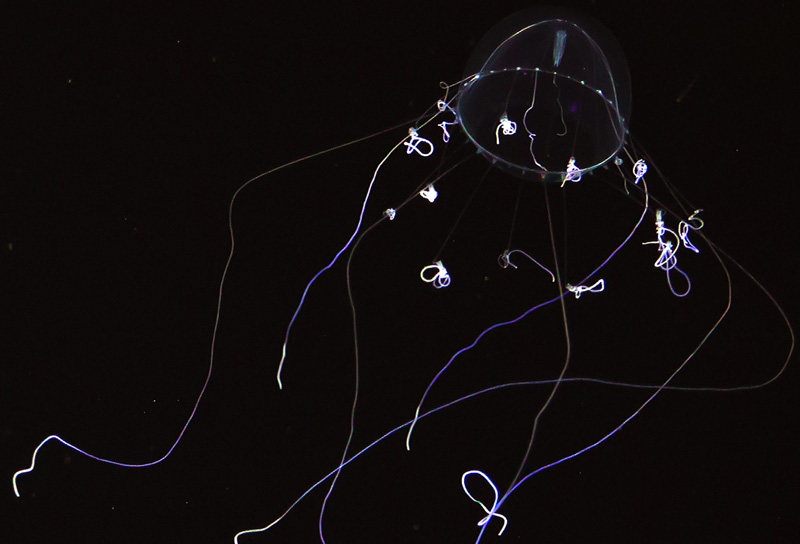
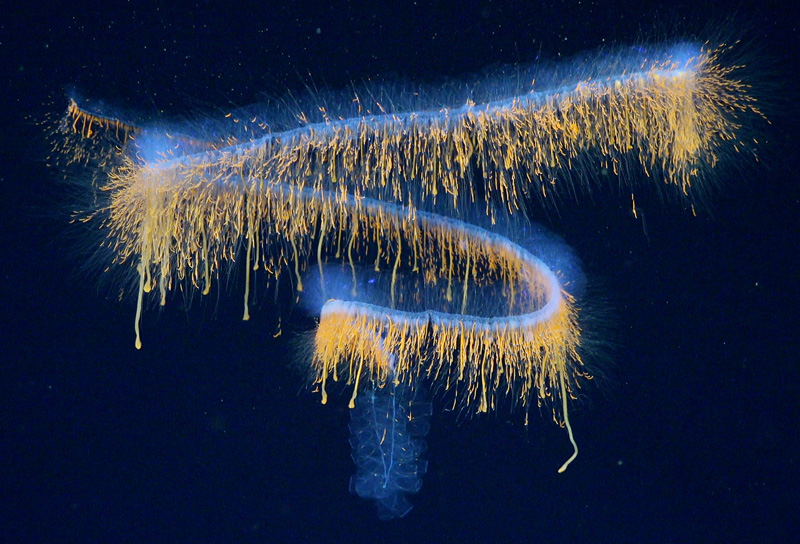
In April, as part of Schmidt Ocean Institute’s Designing the Future 3 expedition, Bigelow Laboratory senior research scientists John Burns and David Fields spent two weeks in the South Atlantic studying the diversity of the ocean’s vast midwater region. The creatures there are some of the planet’s weirdest — with long, gelatinous bodies that make them well suited for their dark, high-pressure home but difficult to study.
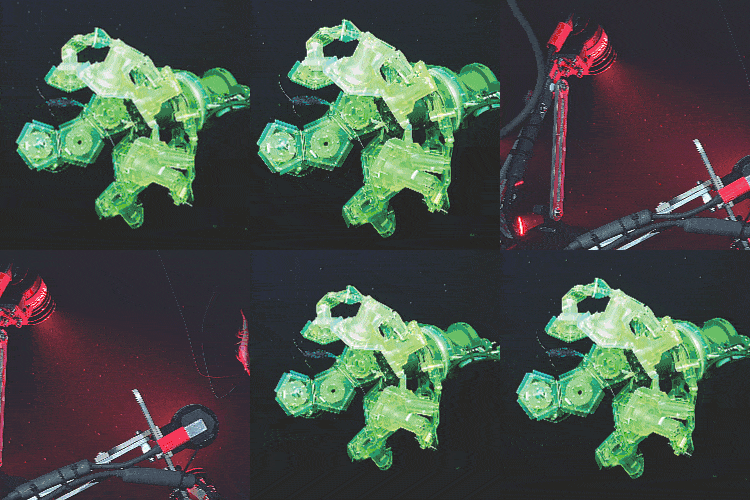
Funded by the Sasakawa Peace Foundation Ocean Shot program, Burns and a team of collaborators have been designing genomic techniques and new robotic and imaging technology to study these fragile, understudied members of the animal kingdom. They can take 3D images from the ROV of transparent animals, for example, that capture their external and internal structures and provide precise physical measurements. The ultimate goal is to create tools to sample these animals non-invasively.
“The technology we’re developing is opening up this ecosystem to scientific exploration,” Burns said. “If this cruise is any early indication, the discoveries made in this realm are going to be really exciting.”
Over the course of two weeks, they stumbled upon a lanternfish, which brightly lit up the black expanse the moment the ROV turned its lights off. They found delicate animals that may be 100s of years old. They tracked tiny crustaceans whose refined senses and strong swimming skills allowed them to evade the ROV. And they observed the peaceful fall of “marine snow,” the steady stream of organic material sinking from the surface that helps sustain all of this life.
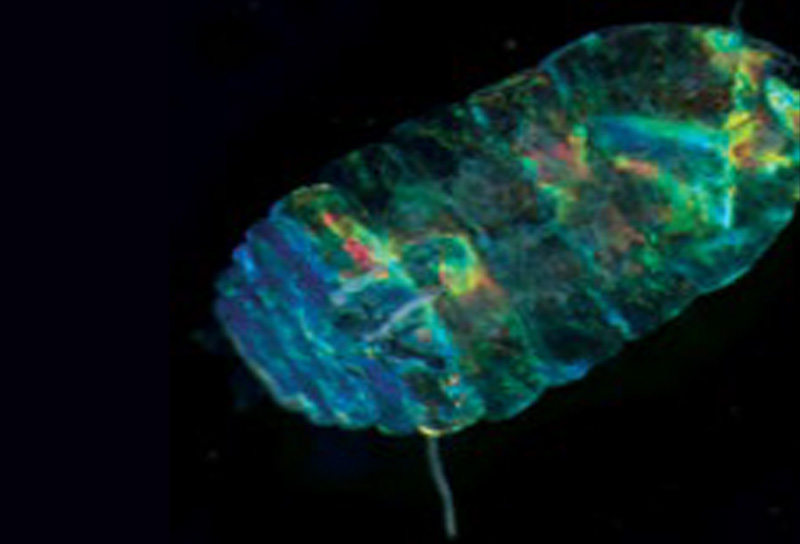
Alongside a second Ocean Shot-funded team, which included Fields, the multidisciplinary and international cohort of researchers combined some of this new tech with chemical and genomic data, traditional net surveying techniques, and behavioral studies. The samples collected and the in-situ observations made on this expedition are going to illuminate how animals live and move through this environment.
“It really does feel like you’re exploring space,” Fields said. “The ship, the people, the science that’s going on — it’s all just amazing and an incredible privilege to be part of.”